
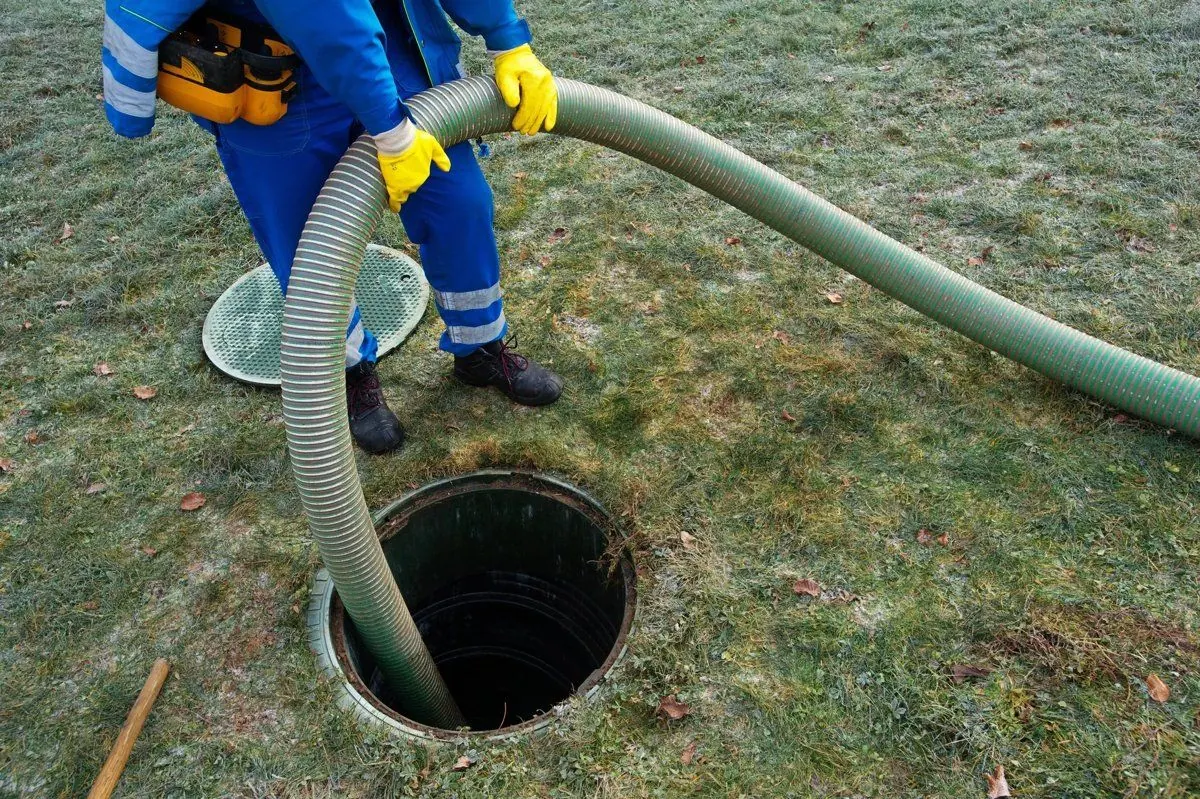
Book the pump-out on its own, or add a maintenance check on the same visit: filter cleaned, pump and alarm tested and the field walked. Either way you get a written record to keep with your property papers.
Signs you may need this
- You cannot remember the last time the tank was pumped
- Drains are slow or gurgle, especially after laundry
- A sewage smell near the tank, the house or the field
- You bought the property and have no pump-out records
- Household size or water use has grown since the system was installed
- The high-level alarm on the holding tank has sounded
- You are not sure how often the tank should be pumped
Holding tank pumping
A holding tank stores everything until it is pumped. There is no drain field, so it fills steadily and needs emptying on a schedule set by how the building is used.
They are common on cabins, shops, suites and lots where the soil cannot take a field. We test the high-level alarm at each pump-out and help you set a schedule that fits.
- Pump the tank fully and check the inlet and lid
- Test the high-level alarm and float
- Work out a schedule from the tank size and how the building is used
- Give you a written record of each pump-out
What we do
- Locate and open the tank lids, and tell you if digging is needed to reach them
- Check liquid level, scum and sludge depth before pumping
- Pump out the tank and clean the effluent filter if your system has one
- Look at the baffles, walls, inlet and outlet while the tank is empty
- Record what we found and suggest how soon to pump again
Safety first. Never open a tank lid and never climb into a tank. Tank gases are dangerous and a fall in can be fatal. Keep children and pets away from any open lid.
What affects the quote?
- Tank capacity and the number of tanks to empty
- Whether lids are accessible, buried or need risers
- Truck access, hose reach and the work agreed before the visit
You get the price before we start.
Before you book
- Any known tank size and date of the last pump-out
- Where the lids are, if known; do not open them
- Gate access, driveway restrictions and a safe parking location
Common questions
How often should a septic tank be pumped?
The interval depends on tank size, occupancy, solids accumulation and the system maintenance plan. If records are missing, ask for an assessment rather than assuming every property needs the same interval.
Will pumping fix slow drains?
Not necessarily. A septic tank normally contains liquid. Slow drains can also come from a blocked pipe, a pump problem or a field that is not accepting effluent. Diagnosis matters before treating pumping as the solution.
Is a pump-out the same as septic system maintenance?
No. Pumping removes accumulated solids. System maintenance can also involve filters, pumps, floats, alarms and checks specified by the maintenance plan. Confirm the scope of the visit when booking.
What should I ask about the pumping price?
Ask about tank capacity, access to lids, hose reach, disposal, records and any excavation or other additional work. You get the price in writing before the visit.
How often does a holding tank need pumping?
It depends on the tank size and how much water the building uses. A small cabin may go months, a busy suite only weeks. We help you set the schedule.
What is the difference between a holding tank and a septic tank?
A septic tank sends treated liquid to a drain field. A holding tank has no outlet, so everything stays in the tank until it is pumped.