
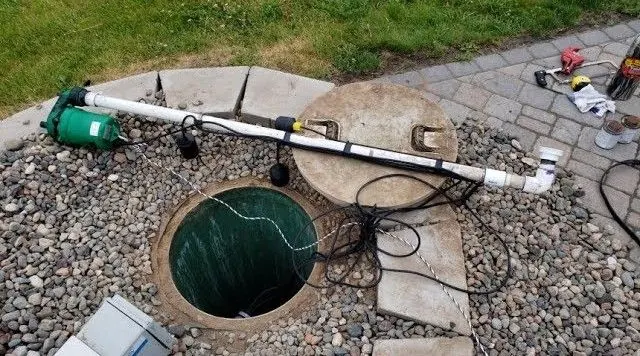
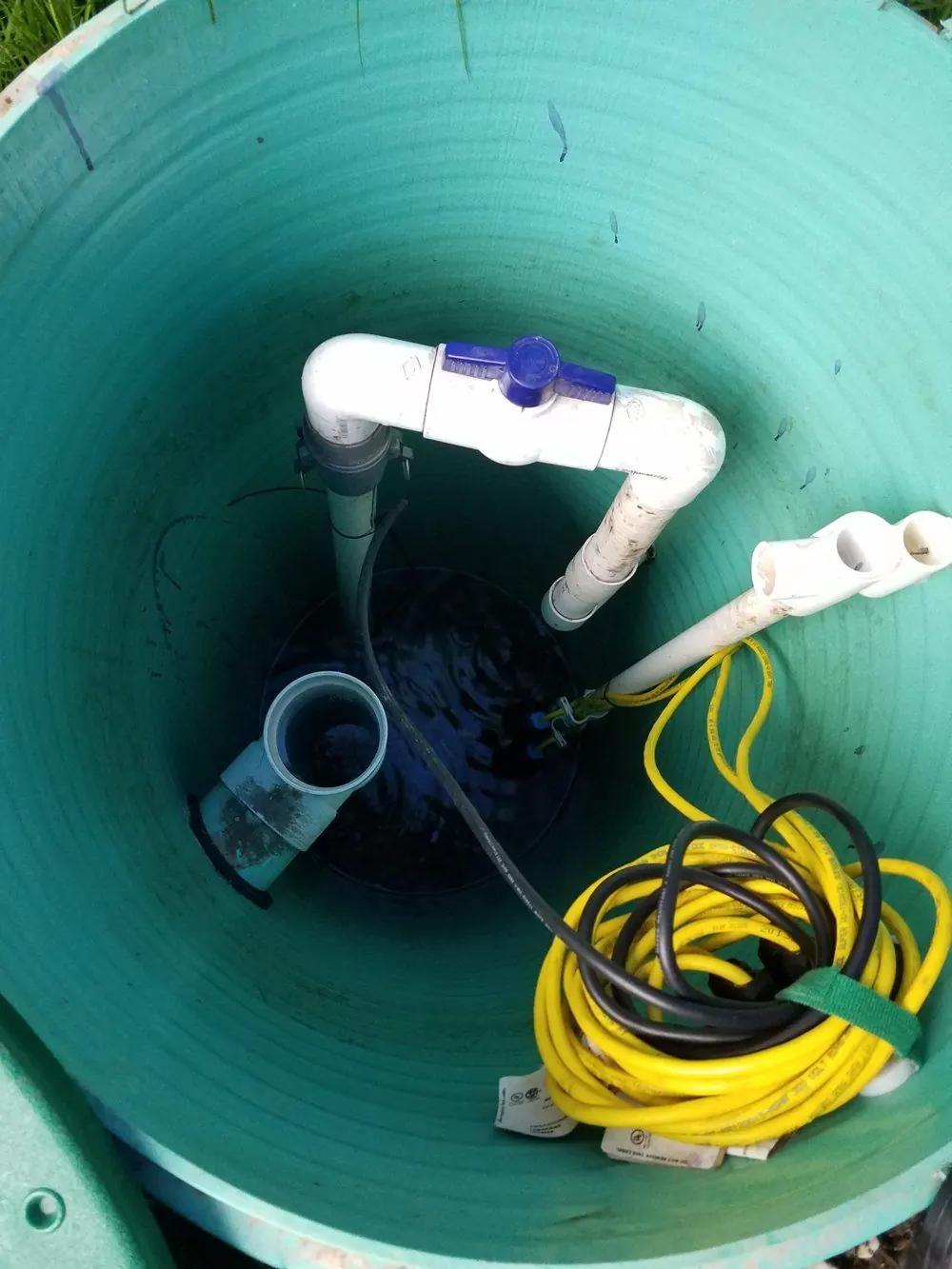
The pump is the part most likely to wear out. When the pump or its float fails, water rises in the chamber, the alarm sounds and the house can back up. We find out whether the problem is the pump, the float, the filter, the panel or the power, and replace only what failed.
Signs you may need this
- The alarm sounds and the pump does not run
- The pump runs constantly or turns on and off in quick bursts
- A loud humming or grinding noise from the chamber
- Slow drains with a pumped system
- The pump is old and you do not know when it was installed
What is in a pump chamber
- The pump: a submersible pump that moves effluent out to the drain field
- Control floats: they switch the pump on when the level rises and off when it drops
- Alarm float: it sets off the beacon and buzzer if the level gets too high
- Effluent filter, where fitted: it keeps solids out of the discharge pipe and needs regular cleaning
Common causes of a pump chamber problem
- The pump motor has burned out, or it is not getting power
- A float is stuck, damaged or tangled, so the pump never gets the signal to start
- A clogged effluent filter is stopping water leaving the chamber
- A burst of water use, such as heavy rain, guests or back-to-back laundry, has overwhelmed the pump for a while
Before you call
- Reduce water use if the alarm is sounding
- Note any visible alarm message and when it started
- Keep chamber lids and electrical panels closed
- Do not repeatedly reset a tripping breaker
What to discuss in the service scope
- Review symptoms, system records and pump specification
- Assess accessible pump, float and discharge components within the agreed scope
- Identify compatible replacement pumps, floats, valves or fittings
- Confirm the qualified electrical contractor needed for electrical testing or connections
- Verify operation and alarm function within the authorised scope
- Provide written findings and next steps
Safety first. Never reach into a pump chamber. Power to the pump should be switched off at the breaker by a qualified person before any work.
What affects the quote?
- Pump duty, discharge arrangement and compatible replacement specification
- Condition of floats, pipework, connections and controls
- Safe chamber access, installation work and any separate electrical scope
Ask for the scope and any additional work to be explained before booking. We do not quote a fixed price from a symptom alone.
Before you book
- Pump model or old invoice, if available without opening the chamber
- What the alarm or pump has been doing
- Any recent power problems or changes in water use
What to know in BC
Confirm the replacement specification, the appropriate septic practitioner and any separate electrical scope. Changes to the system design need assessment before work proceeds.
Common questions
How long does a septic pump last?
It depends on use and conditions. Pumps that cycle constantly, run dry or handle grease wear out sooner.
Why does my pump run constantly?
A stuck float, a failed check valve or a high-water condition can all do it. Constant running shortens pump life, so it is worth a quick call.
Do you replace floats only?
Yes. A float or a switch is often the cheapest fix and the most common cause.
Does an alarm mean the tank is full?
Not necessarily. On a pumped system it means the pump chamber level is high, which points to a pump, float, power or water-use problem.
What affects the cost of this service?
The quote depends on pump duty, discharge arrangement and compatible replacement specification, as well as access and the agreed work. Ask what is included before booking; a symptom alone is not enough to set a reliable price.